






Subscribe to newsletter
Derived from Australian natives.
Developed in the lab. Delivered to your door.
Energy Returns. Focus Doesn’t Always. Here’s What’s Happening in the Second Trimester
The second trimester is often described as the “better” phase of pregnancy.
Energy tends to return, nausea may ease and there’s a sense of settling into the experience.
And in many ways, that’s true.
But for a lot of women, something still feels… slightly off.
Not as depleted as before, but not quite back to baseline either.
A shift, not a reset
By the second trimester, your body has adapted to the initial surge of early pregnancy.
Hormones begin to stabilise.
Energy production becomes more consistent.
The intensity of those early weeks starts to soften.
From the outside, it can look like things have “evened out.”
But internally, the demands haven’t disappeared.
They’ve simply changed.
Why energy improves
One of the most noticeable differences in the second trimester is the return of energy.
This is partly due to hormonal stabilisation, but also because your body has become more efficient at managing its new workload.
Energy production begins to feel more reliable.
The sharp dips of early pregnancy tend to ease.
But that doesn’t mean demand has decreased.
It means your body has adapted to meet it more effectively.
Why focus can still feel off
Even as energy improves, many women notice that cognitive clarity doesn’t fully return.
Focus can feel inconsistent, memory a little less reliable and mental sharpness slightly dulled.
This isn’t unusual.
Your brain is still operating under increased demand, supporting both your own physiology and ongoing fetal development.
Nutrients like choline continue to play a critical role here, contributing to memory, cognitive processing, and neural development. Yet intake often remains below optimal levels, particularly without targeted support.
At the same time, your cognitive load has shifted. There’s more to hold, more to process, and more happening beneath the surface.
The result is a subtle but persistent sense that things aren’t quite as effortless as they once were.
A different kind of demand
What defines the second trimester isn’t intensity, but consistency.
Growth continues, development progresses and your body is steadily supporting two systems at once.
This creates a different kind of demand; one that doesn’t always feel urgent, but is ongoing.
And because it’s less acute, it’s easier to overlook.
The illusion of “feeling better”
Feeling better can sometimes create the impression that support is less important during this phase.
But in reality, the opposite is often true.
As symptoms ease, attention tends to shift away from what the body still requires. Yet nutrient demand remains elevated, and in some cases continues to increase as pregnancy progresses.
Without consistent support, subtle gaps can begin to form.
Not immediately noticeable, but cumulative over time.
The gap between intake and need
Even with a balanced diet, meeting these requirements consistently can be challenging.
- Nutrient needs remain higher than baseline.
- Absorption can vary.
- And certain nutrients, again, like choline, are difficult to obtain in meaningful amounts through food alone.
Many prenatal formulations are designed to meet general recommendations, rather than reflect the sustained demands of this stage.
Which can leave a gap between what’s needed and what’s reliably supplied.
What your body may still be asking for
By the second trimester, the signals are often quieter.
Less about depletion, more about subtle shifts in capacity.
Energy that’s present, but not consistent.
Focus that comes and goes.
A sense of operating slightly below your usual level.
For many women, this reflects ongoing demand, one that hasn’t disappeared, only become less obvious.
A more consistent approach to support
At this stage, support becomes less about reacting to symptoms, and more about maintaining stability:
- Providing nutrients in forms the body can use.
- At levels that reflect sustained demand.
- In a way that supports both ongoing development and your own physiological needs.
Because the second trimester isn’t a return to baseline.
It’s a continuation; just in a more balanced, steady state.
The intensity of early pregnancy may ease, but the work your body is doing continues.
And often, it’s this quieter phase that benefits most from consistent, considered support.
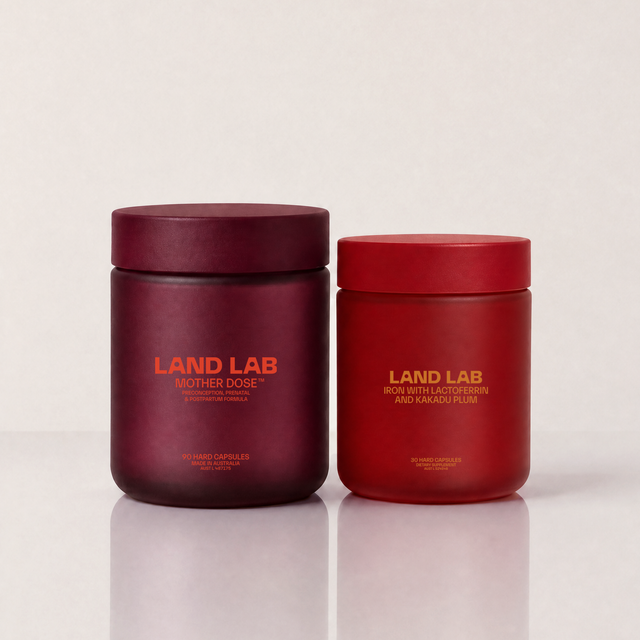
Explore Mother Dose →